

Publication Date
June 29, 2026
Category
Phishing Simulations
Reading Time
7 Min
Author Name
Shubh Arya
How to Stop Employees Falling for Vishing and Smishing Scams
There are certain scenarios every security leader may have played out in their mind, hoping they never actually unfold. An employee receives a text that looks exactly like a banking alert, clicks the link, and submits their login details. Or they pick up the phone, hear a convincing voice claiming to be from IT support, and hand over their credentials. By the time anyone realizes what has happened, the damage is done.
Vishing (voice phishing) and smishing (SMS phishing) are no longer new threats. But they are getting harder to defend against.
Having worked with security teams across industries, I have seen a common pattern. Companies invest heavily in firewalls, email gateways, endpoint protection and annual phishing awareness sessions. But then an attacker picks up the phone or sends a text message, bypasses every single technical control, and walks straight through the front door by exploiting the one thing no software can fully patch: human judgment.
Why Vishing and Smishing Bypass Organizational Defenses
Email, based phishing has been in the security conversation for decades and organizations have built real muscle around it.
But vishing and smishing operate through channels that most security programs have historically ignored.
A smishing attack arrives as a text message: urgent, personal, and designed to look legitimate. It might be on the lines of: your package is delayed, your bank account is suspended, or that your CEO needs you to process an urgent payment. The message is brief, the urgency is high, and the employee is reading it on a personal device where their guard is already lower. Traditional spam filters, DMARC protections, and secure email gateways do not touch SMS. The attack lands directly in the employee's hand.
Phone phishing works through a different kind of manipulation. A skilled caller does not need to send a malicious link. They build trust through conversation, using the right tone, terminology and urgency. They impersonate IT helpdesk teams, executives, vendors, or regulators. They create pressure and walk employees through handing over access, transferring funds, or revealing sensitive information in real time.
Artificial intelligence has made both threats significantly worse. AI, generated voice synthesis can now replicate the speech patterns and tone of real executives convincingly. Phishing text messages are being crafted with language models that eliminate the grammatical errors and awkward phrasing that employees were trained to spot. The attack surface has expanded, but most awareness programs have not kept pace.
How the Gap Between Awareness and Human Behavior Leads to Breaches
Most employees may not have actually experienced a vishing or smishing attack in a controlled environment.
Reading about a threat/sitting through a training session and responding correctly when it arrives are two entirely different things. That gap between awareness and behavior is where organizations get breached.
This is why simulation matters. Actual simulated vishing and smishing scenarios that put employees in realistic situations and show them — through lived experience — how these attacks work and what the right response looks like.
In fact, simulation alone isn’t enough. What matters is what happens with the data that simulation generates. Which employees are repeat risks? Which departments show consistent behavioral gaps? Which interventions are actually changing behavior over time?
This is the shift from security awareness to Human Risk Management — from measuring whether employees completed training to continuously measuring, scoring, and reducing actual human cyber risk across the organization.
What a Real Defense Against Vishing and Smishing Looks Like
If organizations want to genuinely reduce their exposure to vishing and smishing, there are a few things they need to do consistently.
1. Treat Voice and SMS as Active Attack Surfaces
Security programs that simulate only email phishing leave a significant gap. Attackers know this, and they exploit it. A mature security awareness program runs realistic simulations across all the channels attackers actually use — including SMS and voice — because the only way to understand employee vulnerability is to test it continuously.
2. Move beyond one, size, fits, all training
Not every employee carries the same risk. Someone with access to financial systems, executive communications, or privileged credentials is a far more valuable target for a phone phishing attempt. Risk, based, adaptive interventions — where the content, frequency, and scenarios are calibrated to the individual's actual behavioral profile and exposure level — produce meaningfully better outcomes than generic awareness campaigns.
3. Use behavioral data, not just completion rates
The question is not whether employees finished a training module. It is how they actually respond when a realistic smishing attack or vishing call arrives. Continuous behavioral intelligence — tracking click behavior, call response patterns, credential submission rates, reporting behavior, and HDR™ scoring over time — gives security teams the data they need to act before an actual breach, not after.
4. Create a culture where reporting is normalized
When an employee receives a suspicious phishing text or an unexpected call from someone claiming to be from IT, they need to feel confident reporting it quickly, easily, and without fear of judgment. Organizations that build this culture catch early indicators of real attacks. ### 5. Measure risk reduction, not just activity
Running simulations is not the goal. Reducing measurable human cyber risk is. Organizations that want the strongest human defenses need to track whether their interventions are actually moving risk scores over time and they can demonstrate that reduction to leadership, auditors, and compliance teams with clear, audit, ready reporting.
Closing Thoughts
Technical controls still matter. Policies still matter. But the human layer is where many modern attacks begin, especially when attackers use phone calls and text messages to bypass traditional defenses.
Organizations need to treat vishing and smishing readiness as an ongoing discipline, not a once, a, year awareness exercise. The strongest programs combine simulations, behavioral intelligence, adaptive interventions, and measurable risk reduction across every attack vector employees actually face.
That is exactly what SimuPhish is built for. As a Human Risk Management+ platform, it helps organizations simulate real attacks, identify employee risk, deliver targeted learning, and demonstrate measurable improvement over time across email, voice, SMS, and more.
See how SimuPhish helps organizations reduce human cyber risk.
See SimuPhish in actionFAQs
Related Articles
The Meeting Invite That Wasn't: Inside a State-Backed Phishing Campaign
Calendar invite phishing uses a real Microsoft login page to take over accounts. See how Storm-2372's device code campaign works and why the Gulf is a target.
Oct 14•5 Min read
Why QR Codes Are Now a Board-Level Blind Spot
Quishing hides phishing links in QR codes to slip past email filters and MFA. See how the FBI's Kimsuky warning changed the threat, and what to ask your team.
Oct 8•4 Min read
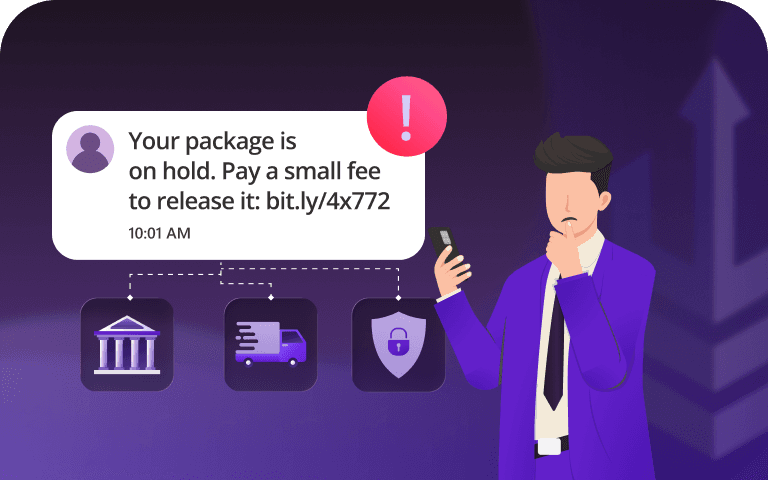
What Is Smishing? A Guide for Security Teams
Smishing is phishing delivered by SMS. Learn how attackers impersonate banks and couriers, real examples from the US and UAE, and how security teams defend against it.
Sep 24•6 Min read